Number of views: 1 Author: Editor of this site Release time: 2025-10-28 Source: This site
Abnormal compressor vibration failure
Knowledge points: Vibration anomaly analysis, mechanical failure
1. Case Overview
Equipment problem: Recently, our company received a compressor repair. The customer reported that the vibration value detected by the equipment during operation was abnormally high, reaching 8-9mm/s, which was significantly higher than other similar equipment.
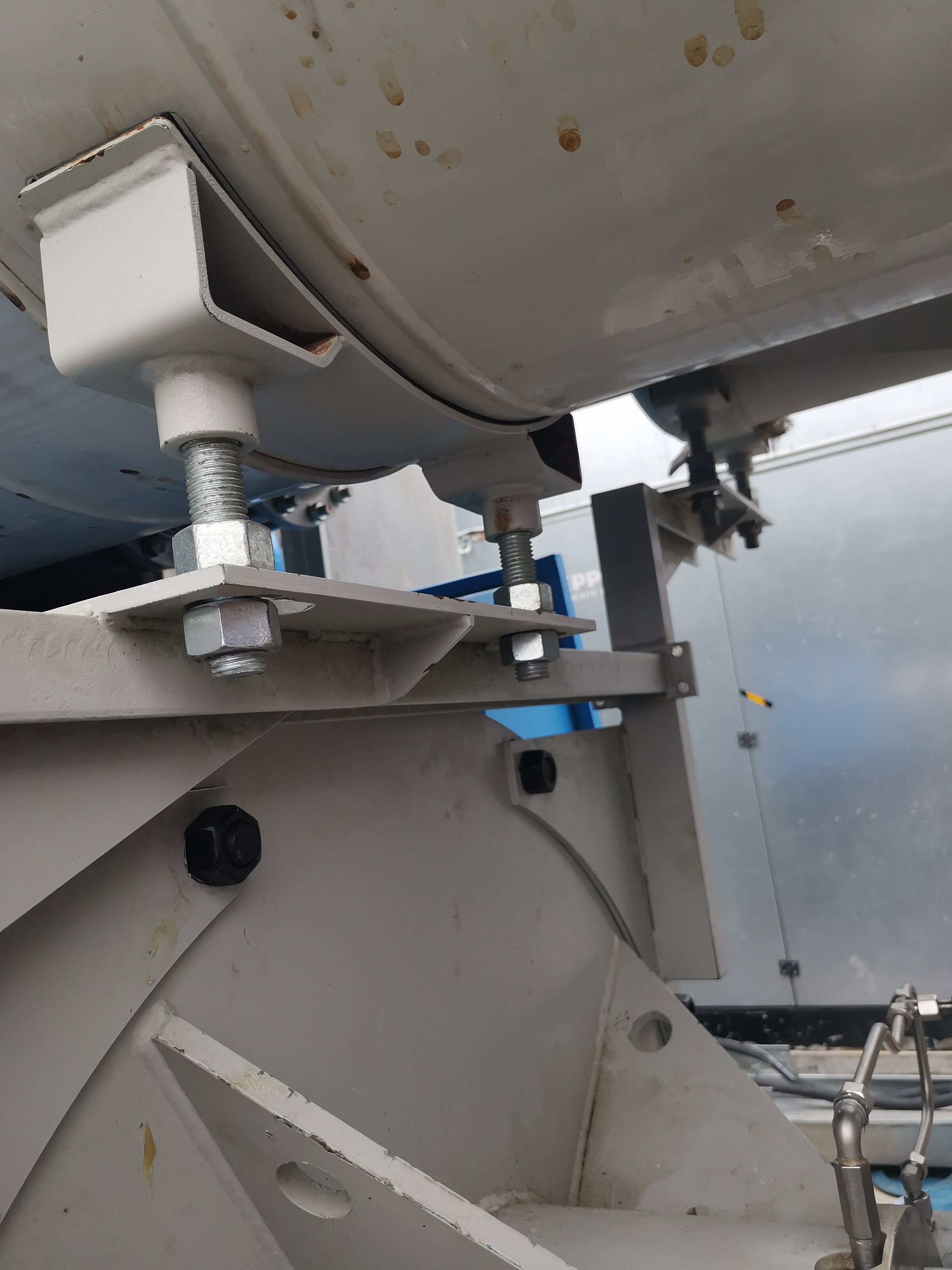
Processing process: After our maintenance engineer arrived at the scene, after preliminary diagnosis, the investigation focused on the auxiliary support structure of the compressor. First confirm the adjustment point, and then adjust the 4 positions of the auxiliary support screw according to our company's requirements; after standard locking operation, re-test, the vibration value dropped to 4-5mm/s, returning to the normal operating level;
2. Root cause analysis
The root cause of this failure was that the support force of the auxiliary support was not in place, causing the nut to loosen. Its chain consequences include:
1. Increased component damage: Loose nuts will cause the position of compressor components to shift and move;
2. Seal failure and leakage : Abnormal vibrations caused by loose nuts will increase the wear of seals, leading to seal failure;
3. Abnormal stress on the components of the unit: Loose connections will affect the abnormal stress on the components, aggravate vibration and cause resonance.
3. Expansion of common causes of abnormal compressor vibration
1. Unbalanced rotor: The mass distribution of rotor components (such as impeller) is uneven, resulting in centrifugal force and vibration during operation;
2. Poor alignment and improper installation: misalignment between the motor and compressor, loose anchor bolts or poor support of the unit;
3. The compressor rotor and bearings are damaged: the bearings are worn, the gap is increased, and the main shaft is bent, causing vibration and noise;
4. Seal damage: Damage to the seal causes media leakage;
5. Internal foreign matter: Foreign matter intruding inside the compressor will interfere with normal operation and cause vibration;
6. Lubrication problems: Insufficient lubricating oil, oil stains in the oil, or blocked oil passages will cause increased friction and thus vibration;
4. Experience summary
Through this case, we summarized the following experiences to guide future installation and maintenance:
1. Pay attention to the adjustment of auxiliary support: whether the support force is adjusted in place;
2. Optimize the installation process: When installing the auxiliary support structure, the installation and locking sequence of the flange connection bolts at both ends and the auxiliary support is very critical; this is mainly to avoid the auxiliary support being affected by the flange connection and causing stress;